
Welcome to Advertising Tomorrow
Across history and around the world, people have tried to glimpse the future. Ancient Sumerians pressed predictions into clay tablets. Chinese diviners cracked oracle bones. The Greeks listened to the Delphic oracle, and medieval astrologers charted the stars to read national destinies. In the United States, too, the future has long been part of the national identity. That sense of possibility reached a high point in the twentieth century and still lingers today.
Why Future Ads?
In the booming years of 20th-century consumer culture, the future became a selling point. Print advertisements in widely read magazines like Life played a powerful role in shaping how Americans saw what lay ahead. Brands promised that machines, electricity, and modern design would usher in a better tomorrow. These images didn’t just sell products; they sold hope.
This project asks: What goes into successful commercial imaginings of the future? What kinds of futures did 20th-century and contemporary American companies imagine? Which social and cultural trends stood out, and how intertwined are these images with technological progress? How much did the product being sold matter compared to the reality it depicted? And, most importantly, why did (and do) futuristic images make people want to buy something?
The Lesson in Three Acts
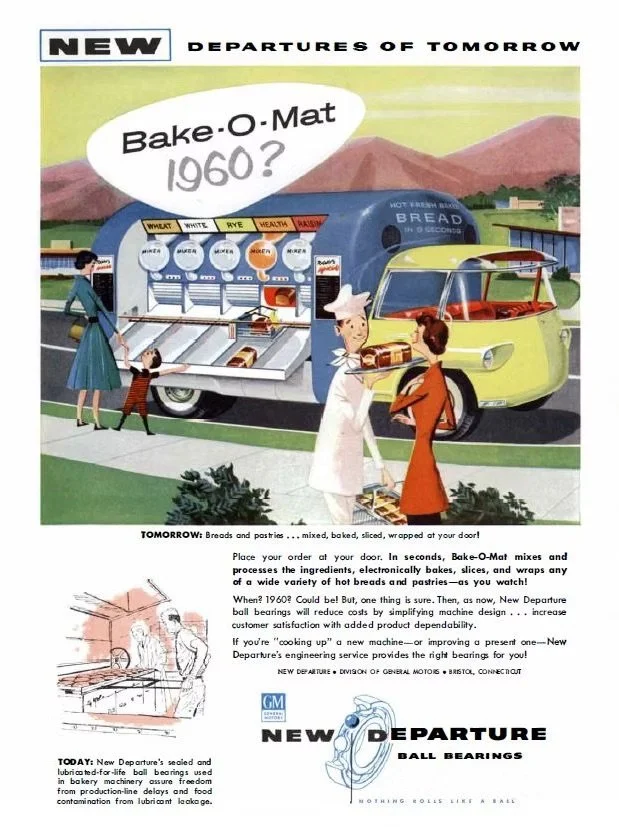
Looking Back: Advertising the Future in the 20th Century
In times of national hardship, like the Great Depression or World War II, American companies offered a kind of visual escape: utopian print ads that imagined a machine-run future of abundance and ease. Unlike artists and thinkers of the same era—who often highlighted fears about overpopulation, war, or resource scarcity—advertisers emphasized individualized solutions and domestic comfort. What made these ads so effective? They paired bold, futuristic design with deeply relatable desires: a clean home, more free time, or a better life for one’s family. Ads showed the idea of the future, not necessarily its reality, and invited consumers to dream along.

Looking Around: Advertising the Future Today
Modern future-focused ads feel different. While they still promise something better, they rely more on immersive videos than static posters. Instead of huge machines and shiny kitchens, today’s ads show sleek screens, augmented reality, and AI helpers—futures that feel more realistic and less cartoonish. And while mid-century ads often focused on household efficiency, today’s campaigns tend to promote connection: being together, staying informed, and building inclusive communities. The aesthetics have changed, but the emotional appeal—selling a better life—remains just as strong.

Looking Ahead: Imagining the Future in a Digital Collapse
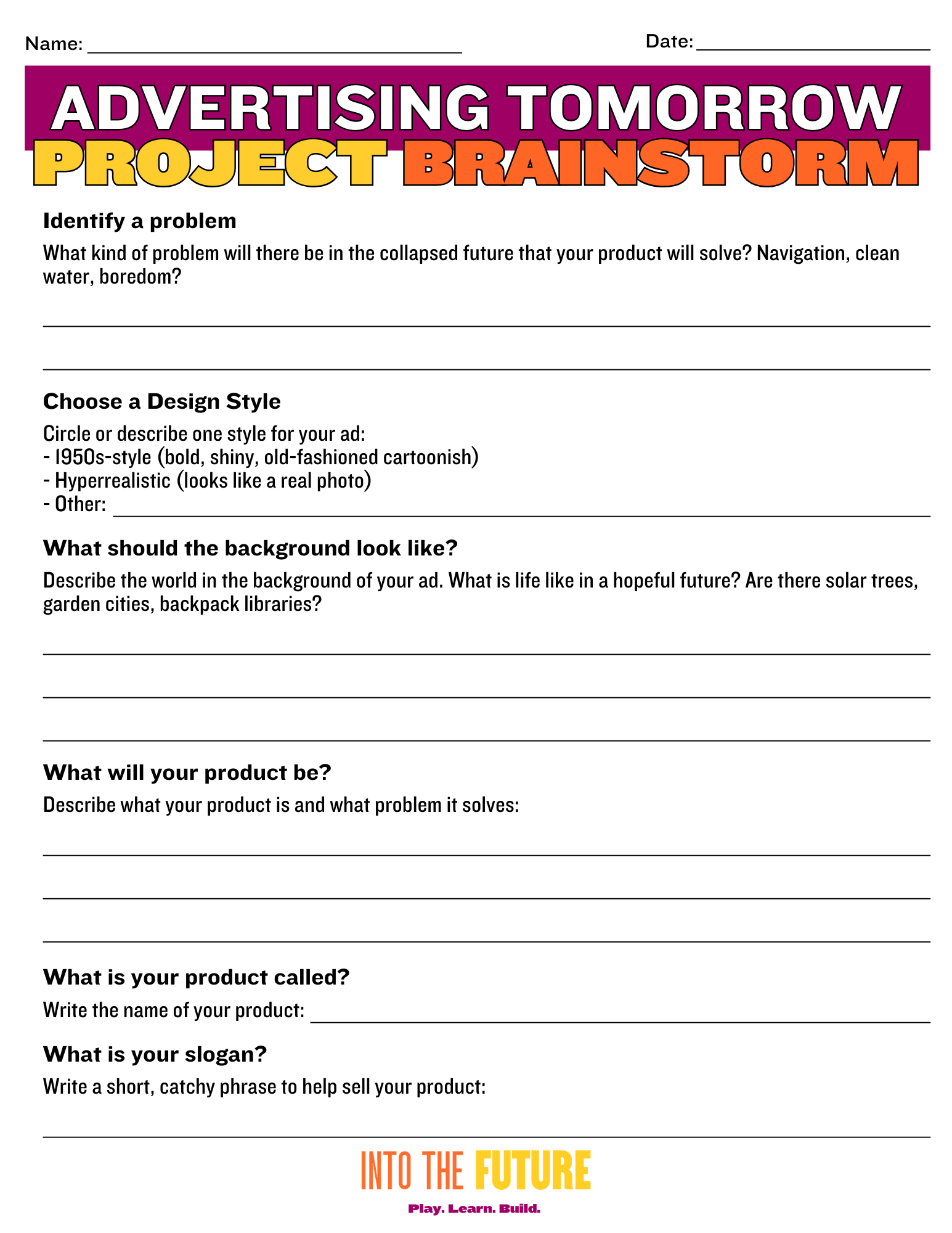
Finally, students are invited to build their own futuristic advertisement—but with a twist. They’ll imagine a future in which digital hardware has collapsed, and people have returned to simpler tools and printed posters. In this world, kids create products that solve problems and offer hope, just like advertisers did in the past. They'll draw from historical design styles, dream up creative new technologies for the post-digital earth, and build rich worlds around their creations. Whether it’s a solar-powered water purifier or a hand-cranked projector that tells bedtime stories, their ads aim to help others imagine a hopeful way forward.
Educator Resources


Further Reading
Adamson, Glenn. A Century of Tomorrows: How Imagining the Future Shapes the Present. New York: Bloomsbury Publishing, 2024.
Corn, Joseph J., ed. Imagining Tomorrow: History, Technology, and the American Future. Cambridge Mass: MIT Press, 1987.
———. Yesterday’s Tomorrows: Past Visions of the American Future. Baltimore: Johns Hopkins University Press, 1996.
Meikle, Jeffrey L. Twentieth Century Limited: Industrial Design in America, 1925-1939. Philadelphia: Temple University Press, 1979.
Novak, Matt. Paleofuture (blog). https://paleofuture.com.
Polak, Fred. The Image of the Future: Enlightening the Past, Orientating the Present, Forecasting the Future. European Aspects: A Collection of Studies Relating to European Integration. Series A: Culture, no. 1. Leyden : New York: A.W. Sythoff; Oceana Publications, 1961.
Quartz. “How Visualizing the Future Helped Make America Rich,” June 23, 2018. https://qz.com/quartzy/1312455/how-visualizing-the-future-helped-make-america-rich.